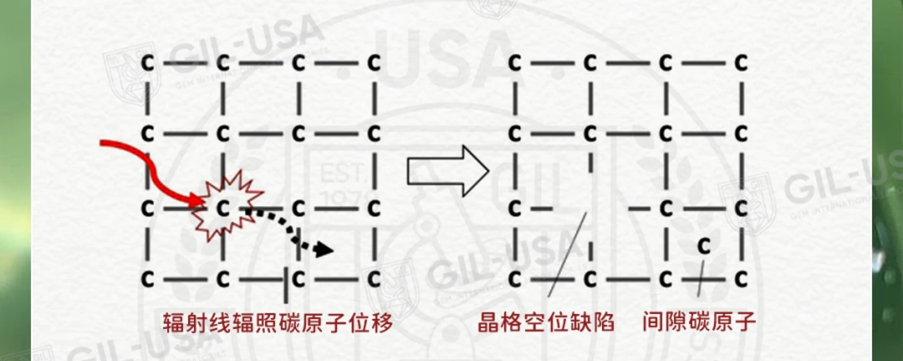
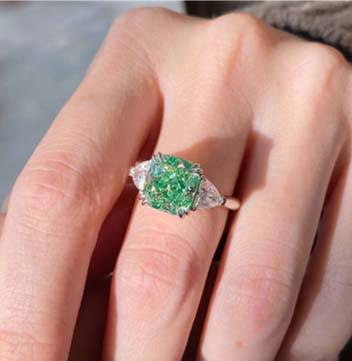
Natural green diamonds are a miracle of creation formed by the earth over millions of years. After forming deep within the earth's strata, they are subjected to long-term natural radiation. When the energy of the radiation exceeds the crystal 's threshold , carbon atoms are forced into interstitial positions, forming a series of lattice defects . Interstitial carbon atoms alter the electronic structure of diamond, resulting in new spectral absorptions that give diamond its green color.
These extremely demanding formation conditions mean that natural green diamonds account for less than 0.1% of all colored diamonds. The vast majority of natural green diamonds are only green on the surface, and natural green diamonds with uniform color throughout are very rare . High-saturation pure green diamonds are even rarer .
Ⅰ、A rare earth legend : Dresden Green Diamond
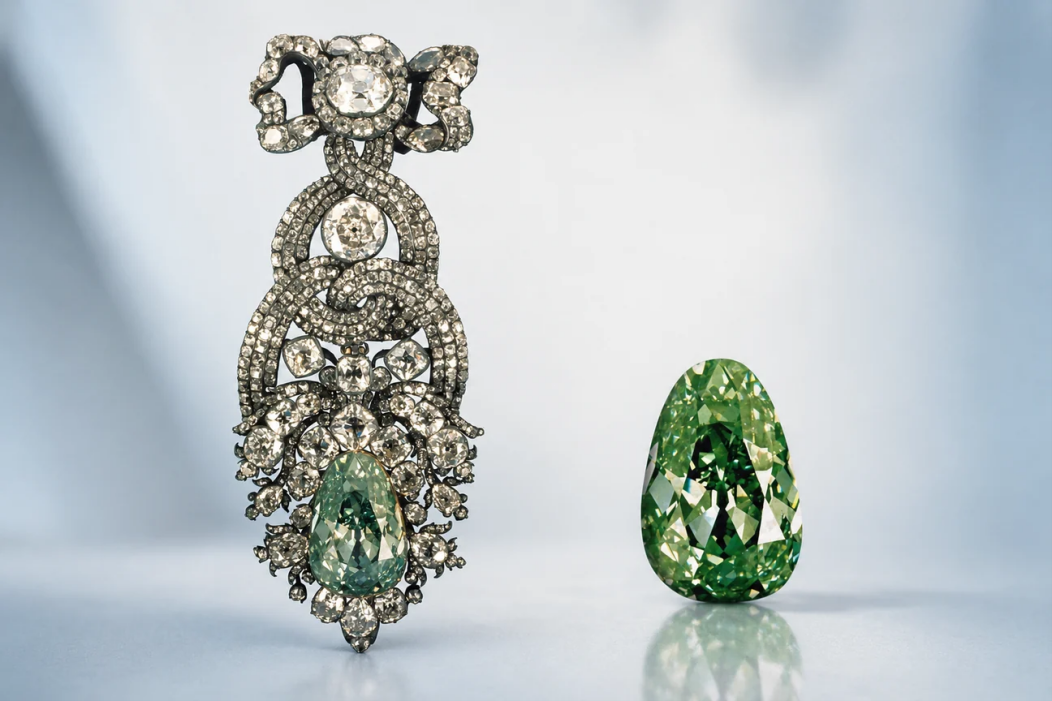
The Golconda mining region in southern India is the earliest known source of green diamonds for mining and circulation, and was the only region in ancient times capable of producing natural green diamonds . The famous Dresden Green Diamond originated from here. In 1722, a London newspaper first documented this pear-shaped green diamond. The rough stone was over 100 carats, and after cutting and polishing, it weighed 40.7 carats, exhibiting a vibrant green color throughout. It was later purchased by King Augustus III of Poland and used to adorn his medals. Due to its uniform color throughout, it became a benchmark for identifying natural green diamonds .
Ⅱ、The emergence and development of cultured green diamonds
Natural green diamonds are rare and extremely valuable, and the huge price difference has spurred the market for counterfeits. In the early days, many green diamond imitations on the market used methods such as coating, dyeing, and color padding, with coating being the most common. These imitations simply cover the surface of a colorless diamond with a thin green film. The color only adheres to the surface of the crystal, and it will wear off and peel off with long-term wear, friction, or slight polishing.
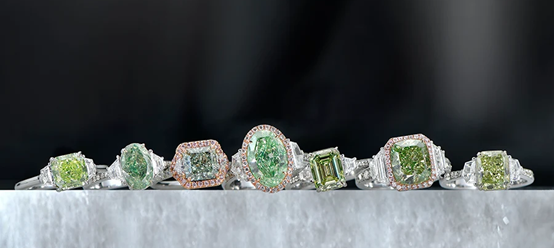
With the development of science and technology, laboratory-grown colored diamonds (HPHT/CVD method) have achieved industrialized mass production, bringing disruptive changes to the colored diamond industry and making green diamonds more accessible. Lab-grown green diamonds possess core advantages such as controllable quality, rich hues, and outstanding cost-effectiveness, reshaping the supply structure of the green diamond industry and breaking down the high-price barriers created by the scarcity and limited mining of natural green diamonds, allowing these previously rare green diamonds to enter the mass consumer market.
Ⅲ、Irradiation process for cultivating green diamonds
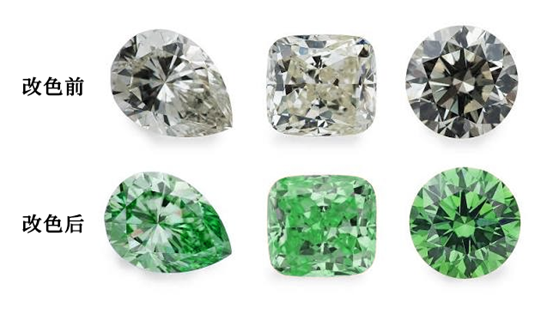
Currently, the mainstream color-changing process for lab-grown green diamonds uses an "irradiation color-changing + high-temperature annealing" treatment method. By irradiating the crystal with X-rays, stable GR1 color centers are generated, giving the colorless lab-grown diamond a green appearance. After that, high-temperature annealing is carried out to eliminate unstable lattice defects in the crystal, improving the problems of uneven color and easy fading in early color-changing products.
Cultured green diamonds, treated with irradiation annealing, maintain their color stably under everyday wear. Compared to natural green diamonds, cultured green diamonds are more affordable, making them a cost-effective alternative that balances aesthetics and value, aligning with current jewelry market demands.
Ⅳ、Cultivating a 4C+5G grading system for colored diamonds
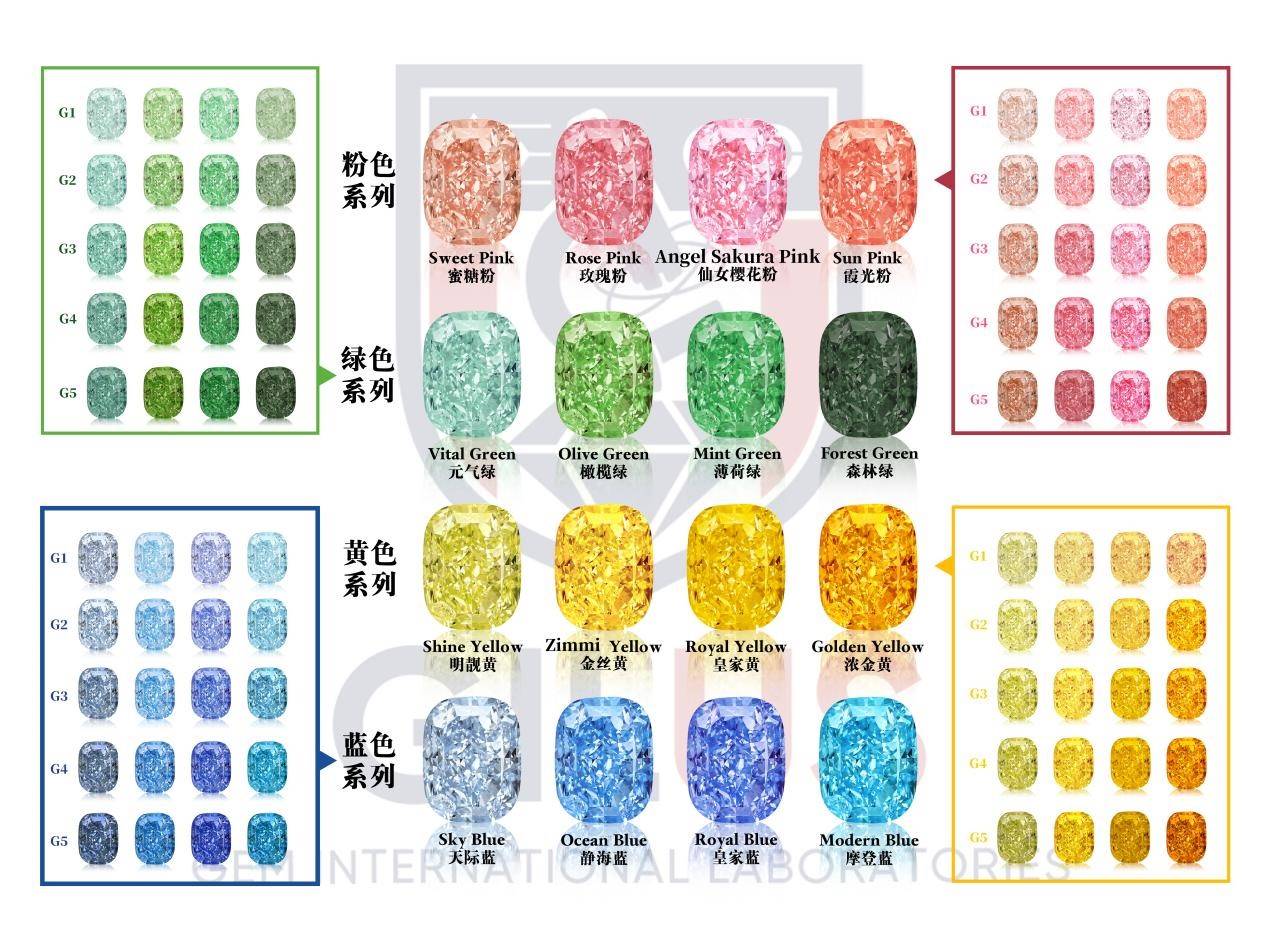
Based on years of experience and technological expertise in gem testing, GIL has innovatively launched a 4C+5G grading system for lab-grown colored diamonds, which is based on scientific spectrophotometry, standard light source grading, and industry market demands. This system allows lab-grown colored diamonds to have definable colors, quantifiable grades, comparable values, and traceable certificates.
The "4C+5G" grading system for lab-grown colored diamonds consists of two main parts: the 4C color classification system and the 5G brightness grading system. Based on overtone characteristics, it further subdivides into four sub-color families. After determining the sub-color families, lab-grown colored diamonds are standardized in color grading based on hue, saturation, and brightness, classifying all sub-color families into five levels: G1 to G5, with G1 being the lightest and G5 the highest.
Ⅴ、Detailed Explanation of Green Series Trademarks
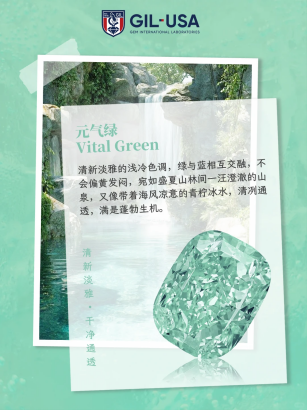
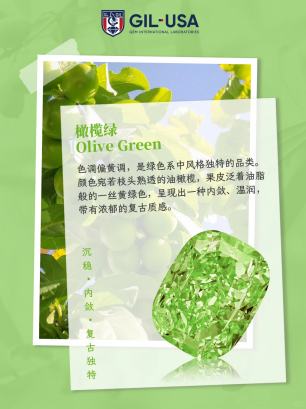
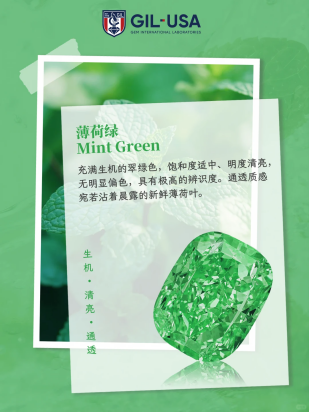
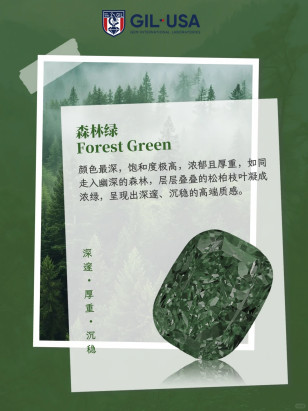
commercial names for green diamonds in four major shades :
Vibrant Green: Vibrant Green is a fresh and elegant light cool tone. Green and blue blend together without being yellowish or dull. It is like a clear mountain spring in the midsummer forest, or like lime ice water with the coolness of the sea breeze. It is clear, transparent, and full of vitality.
Olive Green: Olive green has a yellowish tint and is a unique category within the green family. The color resembles a ripe olive on a branch, with the skin showing a hint of yellowish-green like oil, presenting a restrained, warm, and richly retro texture.
Mint Green: Mint green is a vibrant emerald green with moderate saturation and clear brightness, without any obvious color cast, making it highly recognizable. Its translucent texture resembles a fresh mint leaf glistening with morning dew.
Forest Green: Forest green is the deepest color with extremely high saturation. It is rich and heavy, like walking into a deep forest where layers of pine and cypress branches and leaves are condensed into a deep green, presenting a calm and profound texture.
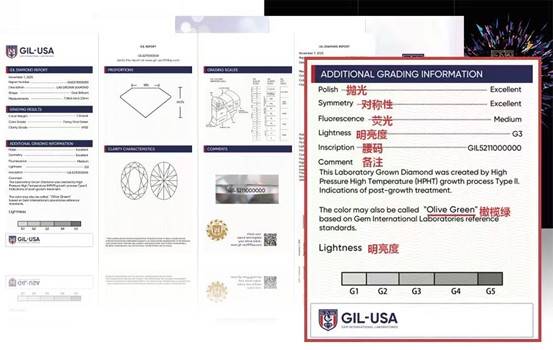
Every lab-grown colored diamond test report issued by the laboratory will be uniformly labeled with: sub-color name + 5G grade, making the information clear, concise and easy to understand, so that consumers can buy with confidence and wear with peace of mind.
In the future, GIL will continue to be based on technology, guided by standards, and centered on service, constantly upgrading testing equipment, optimizing identification processes, and improving service quality to provide the global jewelry industry with more technological, safer, and more efficient jewelry testing services.